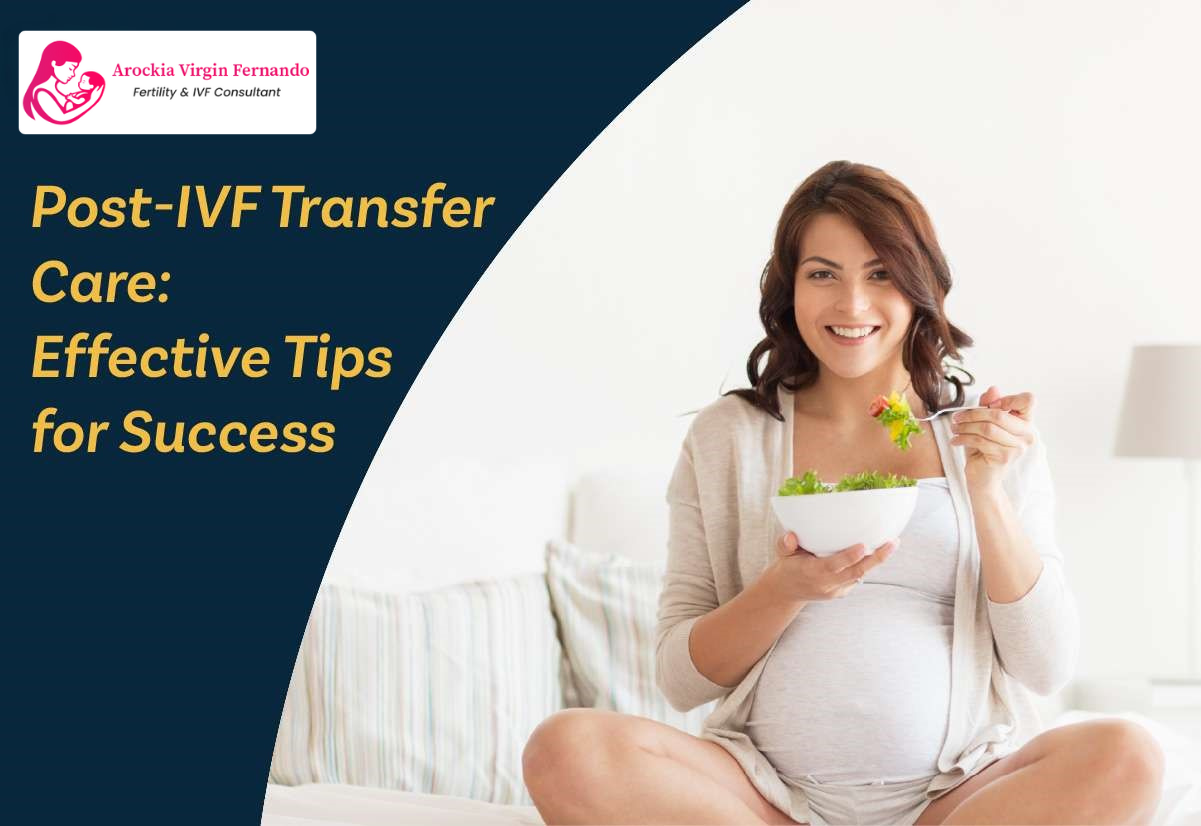
Post-Transfer Care After IVF: Tips for a Successful Outcome
Today, in vitro fertilization (IVF) is one of the most common and effective fertility treatments for couples facing infertility. With advancing technology, IVF success rates have steadily improved across the globe. However, success doesn’t rely solely on your doctor or fertility clinic — your own post-transfer care plays a crucial role in achieving positive results.
If you or a loved one is planning an IVF treatment, here are key post-embryo transfer care tips to help improve your chances of success.
👉 Book an appointment with Dr. Arockia Virgin Fernando for expert fertility guidance.
What Is an Embryo Transfer?

An embryo transfer is the final step in the IVF process. During this stage, the fertility specialist places the fertilized egg (embryo) into the woman’s uterus. The embryo then needs time to attach itself to the uterine lining for a successful implantation.
Care After IVF Embryo Transfer
It usually takes about two weeks after the embryo transfer to confirm pregnancy. Unlike a natural conception, where care begins after confirmation, in IVF, care should start immediately after the transfer. Following these precautions can increase implantation success and reduce the chances of failure.
✅ What to Do After Embryo Transfer
1. Get Ample Rest
Your doctor may recommend bed rest for a short period after transfer. Once home, avoid physical strain, heavy lifting, running, or intense workouts. Take a few days off work to reduce Stress and fatigue.
2. Eat a Healthy Diet
A nutritious diet supports both your body and your developing embryo. Include fresh fruits, vegetables, proteins, and whole grains. Avoid processed foods, excess sugar, and fried items to prevent complications.
3. Stay Hydrated
Drink plenty of water and fluids to support cell function and hormone balance — both essential for implantation and early pregnancy.
4. Manage Stress
Stress can disrupt hormonal balance and negatively affect IVF outcomes. Try deep-breathing exercises, meditation, or light yoga to stay calm and positive.
5. Take Progesterone Supplements
Progesterone helps thicken the uterine lining, making it suitable for implantation. Take your prescribed supplements as directed by your fertility specialist.
🚫 What Not to Do After Embryo Transfer
1. Don’t Miss Medication
Strictly follow your doctor’s prescription schedule. Missing even a single dose can impact your treatment success.
2. Avoid Physical Strain
Refrain from heavy chores, workouts, or lifting weights. Overexertion can interfere with implantation.
3. Avoid Sexual Intercourse
Sexual activity can trigger uterine contractions, which may disturb the implantation process. Please wait until your doctor confirms it’s safe.
4. Skip Hot Baths and Saunas
Hot water raises your body’s core temperature, which can harm the embryo and increase the risk of early miscarriage. Opt for warm, not hot, showers.
5. Don’t Smoke or Drink Alcohol
Alcohol and tobacco can harm the embryo and increase miscarriage risk. Stay completely abstinent during and after the IVF cycle.
When to Contact Your Doctor
Your fertility specialist will monitor your progress closely after embryo transfer. However, contact your doctor immediately if you experience:
These may indicate complications that require prompt attention.
Conclusion
IVF offers new hope for couples struggling with infertility. However, your care and lifestyle after embryo transfer play a vital role in determining the outcome. Don’t wait for pregnancy confirmation — start taking care of yourself right after the transfer for the best results. Always consult a reputable fertility expert and follow medical advice diligently.
FAQs
1. What care should be taken after embryo transfer?
Get plenty of rest, avoid physical and mental Stress, and follow your medication and diet plan carefully.
2. How many days should I rest after IVF transfer?
It’s best to rest for around 7–10 days post-transfer, minimizing physical strain during this period.
3. What should I avoid after embryo transfer?
Avoid sexual activity, strenuous exercise, processed foods, and anything that may overheat your body.
4. How can I improve my success after embryo transfer?
Adequate rest, hydration, balanced nutrition, and stress control are key factors for a successful IVF outcome.